Meeting: September 22, 2026
Immediately after the Battle of Gettysburg, there
were dead United States and Confederate army
bodies strewn all over the battle area. Most
of these bodies were initially put into mass
graves. Gettysburg Attorney David Wills, who
oversaw the creation of the Gettysburg
National Cemetery. This led to the hiring of
Samuel Weaver and Basil Biggs to exhume the
bodies and reinter them in the new National
Cemetery.
Years later, Weaver's son, the now Doctor of
anatomy Rufus Weaver, continued the work of
Discovering the bodies of the dead of
Gettysburg. Join the Baltimore Civil War
Roundtable on Tuesday, September 22, as we
feature
Janet McCabe in
her presentation of
Dr. Rufus Weaver & the Removal of
Confederate Dead from Gettysburg.
The meeting will be held the library of Hiss
United Methodist Church, 8700 Harford Road,
Parkville Md., 21234. (From the beltway
(I-695) the church will be on your right.
Pull into the upper parking lot-the lot just
before the church building- and walk to the
semi-circle at the front. Enter the first
door on the right, go up the stairs to the
second floor and turn left then right into
the library (rm #208).
Janet McCabe’s fascination
with Civil War history began when her father
took her to visit several battlefields
during the summer she was eight years old.
She chose to pursue a career in finance,
earning a BS in Economics from the
University of Virginia and an MBA from the
Amos Tuck School at Dartmouth College, but
kept her love of history alive via
battlefield visits, volunteering and
research until in 2025 she earned the badge
to become a Licensed Battlefield Guide at
Gettysburg.
Janet is
also the former President and Program
Coordinator
of the Chesapeake Civil War Roundtable.
Remember, join the Baltimore Civil War
Roundtable on Tuesday, September 22, as we
feature
Janet McCabe in
her presentation of
Dr. Rufus Weaver & the Removal of
Confederate Dead from Gettysburg ib the Hiss
UM Church library.
If you can be in person, register for the
Zoom at
https://us02web.zoom.us/meeting/register/XUdd9E2qT-utD2CtVG8J9Q
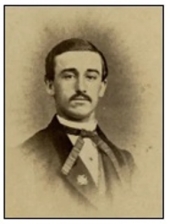 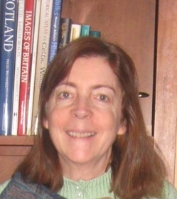
Dr. Rufus Benjamin Weaver
Janet McCabe
Minutes
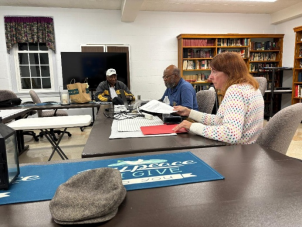
Our September meeting was our 506th. The
meeting had 6 in-person attendees (including
the speaker) and 15 attendees on Zoom.
Our speaker was Janet McCabe. Ms. McCabe is
former President and Program Coordinator of
the Chesapeake Civil War Roundtable and a
Licensed Battlefield Guide at Gettysburg.
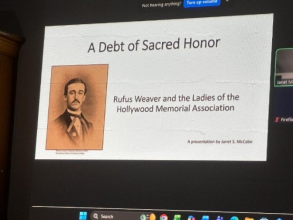
Ms. McCabe’s presentation was entitled
A Debt of Sacred Honor: Rufus Weaver and the
Ladies of the Hollywood Memorial Association.
In the early battles of the Civil War, the
dead were typically left on the battlefield
where they fell. If they were buried, they
would be buried by the victorious army.
While Confederates would bury Union
soldiers if they stuck around after the
fighting ended, they usually quickly left
without doing so. Later in the war, Union
soldiers crossing these same battlefields
were horrified to see the skeleton remains
of their comrades.
During and after the war, there were great
differences in the reburying of the Union
and Confederate dead. On the Union side,
there were national cemeteries legislated
and financed by the federal government.
Caring for the dead was largely a wartime
project; by the end of 1866 the task was
completed. Confederate dead, on the other
hand, were interred in private cemeteries
financed by public subscription, and the
task was a postwar project. Across the
South, groups of women formed Ladies
Memorial Associations and raised money to
retrieve and rebury Confederates killed in
battle. However, they didn’t have the money
to go to Maryland and Pennsylvania and
retrieve the dead there. In the spring of
1869, an article appeared about plowing
human remains at Gettysburg. In 1870, the
ladies got in touch with Samuel Weaver, who
had been hired to relocate the Union dead to
Gettysburg National Cemetery, about shipping
dead Confederates back to the South.
However, Weaver was killed in an accident
in February 1871, and his son Rufus took
over.
Rufus Weaver was born in Gettysburg in 1841.
He graduated from Pennsylvania College (now
Gettysburg College) in 1862 and studied
medicine in Philadelphia, probably in
1862-3. By 1871, he was a lecturer in
anatomy at Hahnemann Medical College. In
the summer of that year, he exhumed 317
identified dead–80 for the Ladies Memorial
Association of Charleston, S.C., 100 for the
Association of Savannah, GA and 137 for that
of Wake County, N.C. Ms. McCabe found
statistics for the Carolinas concerning the
locations of the remains–where they had been
found on the Gettysburg battlefield. In a
letter from October 1871, Weaver raised the
question of why Virginia hadn’t tried to
recover its dead. Virginia had more unknown
dead because many of those who had
participated in what’s usually known as
“Pickett’s Charge” were beyond the reach of
their comrades. The following month, the
secretary of the Hollywood Memorial
Association got in touch with him, and in
April 1872 funds were forwarded to Mrs.
Adeline (Ada) Egerton of Baltimore. The
owner of a boarding house where people
stayed who came to lecture at Johns Hopkins
University, Egerton ended up being the
go-between for Weaver and the ladies of the
Hollywood Memorial Association.
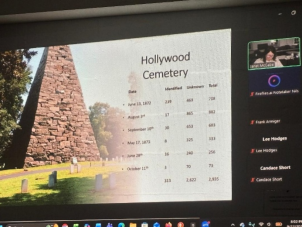
In the first year alone, Weaver sent 2,273
bodies in three separate shipments. On six
separate days between June 13, 1872 and
October 11, 1873, he sent 2,935 sets of
remains to Hollywood Cemetery in Richmond.
Of these, 313 were identified and 2,622
were unknown. Although he had a team of
laborers helping him, the task was grueling
and Weaver--by his own account–typically
worked 18-20 hours a day. He made detailed
notes concerning many of the remains.
Weaver ran into serious difficulties
collecting payment for his service. In
1872, he billed $7,385 but was only paid
$2,800, being owed $4,585 at the end of the
year. Although a financial panic struck in
1873, he was assured he would be paid all he
was due. In 1889, however, he wrote to
Egerton about unpaid debt, claiming he was
still owed over $12,000. Egerton inquired
with people she knew about this, and two
years of investigation followed. In 1891,
Weaver made his case and the association’s
all-male advisory board was persuaded.
Weaver agreed to waive $6,000 of interest he
was owed. When other deductions were taken
into account, the remaining balance he was
owed was $2,105. After he inquired further
in 1901, he was sternly told that he wasn’t
owed anything else. Despite not receiving
what he was due, Weaver did fine
economically and financially. He was the
first man to remove an intact nervous system
from a human corpse. He died in 1936 at the
age of 95. In 2015, a plaque was put up in
Hollywood Cemetery explaining what he did.
|
|
Notes
from the President
Some notes of thanks. First, I’d like to thank all of you who
participated in last month’s “what if” meeting. Civil war
enthusiasts frequently engage in those types of discussions, and
it was fortunate to have Dr. Mark Graber guide us through the
possibilities of John Wilkes Boothe trial. Our thanks to Dr.
Graber!!
All of you should have received the note of thanks and
information we received from the rock creek civil war roundtable
of Washington, d.c. It’s great to know that other organizations
appreciate what we do.
Thanks also to our July 28 speaker Ret. Gen. Ty Seidule. Gen.
Seidule refused to accept his honorarium for the presentation of
A Promise Delivered Ten American Heroes and the Battle to Rename
Our Nation’s Military Bases. His
generosity helps us to continue our work.
As I always say, It is up to you, as BCWRT members, to build up
our organization. You can become more involved by actively
spreading the word about what we do. Invite friends. Take the
lead on developing ideas and group activities. Print our
schedule and share it with your churches, social groups, family,
neighbors, etc.
Need a gift idea for someone. Gift them membership in the BCWRT.
This can be done by sending a check to our treasurer, frank
Arminger. Please mail a check to; Frank Armiger, treasurer
BCWRT, 42 Norwick Circle, Timonium. MD. 21093, 410-591-9977. Or
farmiger@verizon.net using Zelle. Membership is $25 or $35 for
families.
|
Meeting: August 25, 2026
WHAT IF???!!?? At some point in their
historical rumblings, civil war historians,
enthusiasts, students, reenactors, etc.,
will ask themselves the inevitable,
speculative question; What if so and so
happened during the Civil War? What
if Abraham Lincoln had not been elected
president? What if Stonewall Jackson had
survived Chancellorsville?
Join the Baltimore Civil War Roundtable as
we engage in a bit of historic speculation
on Tuesday August 25, 2026, at 7:30 PM.
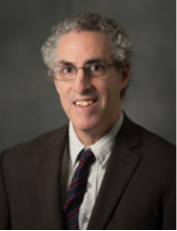
University of Maryland Law Professor Mark
A. Graber will
guide us through a discussion on John Wilkes
Booth…..“Could
Booth have been tried for Treason?
The meeting will be held the library of Hiss
United Methodist Church, 8700 Harford Road,
Parkville Md., 21234. (From the beltway
(I-695) the church will be on your right.
Pull into the upper parking lot-the lot just
before the church building- and walk to the
semi-circle at the front. Enter the first
door on the right, go up the stairs to the
second floor and turn left then right into
the library (rm #208).
Dr. Graber, who
received his AB from Dartmouth, his MA and
PhD from Yale and his JD from Columbia, is
the Jacob A. France Professor of
Constitutionalism at the UMB School of Law.
He is recognized as one of the leading
scholars in the country on constitutional
law and politics. Among his many
publications are: A
New Introduction to American
Constitutionalism; American
Constitutionalism: Structures and Powers and American
Constitutionalism: Rights and Powers.
In November of 2018, Prof. Graber addressed
the BCWRT on his work; The
Complete American Constitutionalism, Volume
Five Part I: The Constitution of the
Confederate States. He
also addressed the BCWRT in May of 2022 when
he presented his book;
"Punish Treason: Reward Loyalty".
Remember, the Baltimore Civil War Roundtable
will present University of Maryland Law
Professor Dr. Mark A. Graber discussing
“Could Booth
have been tried for Treason? on
Tuesday, August 25. at 7:30 p.m. in the
library of Hiss United Methodist Church. We
urge you to attend in person for what is
sure to be a lively discussion. If you
can’t, register for the Zoom at:https://us02web.zoom.us/meeting/register/WnNvDVleQHmACVb0mcCevQ
Minutes
Our August meeting was our 505th. The meeting had 10
in-person attendees (including the speaker)
and 9 attendees on Zoom.
The meeting began with a report from Treasurer Frank
Armiger. At the beginning of July, the
BCWRT had $1,647.40 in the bank. During
that month, we had no income but we did pay
two checks totaling $220. One of the checks
was to Jon Nese, one of the speakers at our
June meeting. The other, a six-month rental
payment, was to Hiss United Methodist
Church. At the end of July, we had
$1,411.40 in the bank.
Our speaker was Mark Graber. Mr. Graber, Regents
Professor in the University System of
Maryland and Distinguished Professor at the
University of Maryland Baltimore, is
recognized as one of the country’s leading
scholars on constitutional law and politics.
Mr. Graber spoke to the BCWRT twice
before–in November 2018 he discussed the
Confederate Constitution, and in May 2022 he
discussed the Fourteenth Amendment of the
U.S. Constitution and the question of when
the Civil War ended–particularly from a
legal standpoint. This month, Mr. Graber
spoke on the question: Could John Wilkes
Booth have been tried for treason?
The U.S. concept of treason was influenced by English law.
Mr. Graber discussed the Treason Act 1351,
which lists seven ways a person could be
guilty of high treason. Article III Section
3 of the U.S. Constitution defines the term
considerably more narrowly, listing only two
things as constituting treason against the
United States. One is “levying war” against
the states (note the plural here–by the time
of the Civil War, Mr. Graber said, levying
war against one particular state government
was not considered treason against the U.S.
as a whole). The other is giving “aid and
comfort” to an enemy of the U.S. There is
no fixed definition of what that means,
although Mr. Graber said that it applies to
foreign adversaries.
There is no evidence that between 1787 and the end of
Reconstruction, anyone thought to change the
definition of treason–although some scholars
claim that in the Aaron Burr trial, John
Marshall narrowed how the term was defined.
Mr. Graber noted that conspiracy to commit
insurrection or rebellion is not
treason–treason requires an overt act,
however small.
Mr. Graber asked: What exactly is “levying war” against
the United States? In order for this to
occur, four things need to take place: 1.)
There has to be an “assemblage” --meaning
more than one person has to participate. If
Booth had acted entirely on his own, the
assassination of Lincoln couldn’t have been
treason. Whether the assemblage has any
chance of success is irrelevant. 2.) There
has to be a federal law that is being
resisted. This can be
any federal law–it doesn’t have to involve trying to
overthrow the federal government. Booth’s
actions, Mr. Graber said, violated no
federal law that existed at the time. 3.)
The resistance to a federal law must be
violent–it must involve force or the threat
of force. 4.) The resistance must be for a
public, not a private, purpose. It is no defense to claim that
a law is unjust–even if the defendant is
absolutely correct in that assertion.
Dr. Graber argued that while the actions Booth took did
not constitute directly levying war against
the United States, and while his actions
were not coordinated with the Confederacy,
he was nevertheless clearly trying to help
the Confederacy. And here one must
ask the question: What does it mean to participate in an
insurrection? As articulated by Supreme
Court Justice Joseph Story, there is no such
thing as being an “accessory” or an
“accomplice” to an insurrection. Anyone who
knowingly does anything for the purpose of
aiding an insurrection–whether the
insurrectionists know it or not–is themself
a participant in the insurrection.
According to Mr. Graber, there were people
who ran the Union blockade of the
Confederacy who were found guilty of
insurrection on this point. Because he
knowingly did something to help the
Confederacy, Mr. Graber concluded that John
Wilkes Booth could indeed have been tried
for treason.
|
|
Notes
from the President
The month of August was always an eventful time during the
American Civil War. In 1861, Abraham Lincoln signed the revenue
act which was the nation's first income tax. Confederate
irregular William Quantrill led his raid on Lawrenceville Kansas
in which up to 200 male citizens were massacred (Frank and Jesse
James were members of the raiding party). The second battle of
bull run was an August affair.
Well, the Baltimore civil war roundtable isn't imposing taxes or
fighting major campaigns, we are still seeking ideas and methods
for increasing our membership. As schools get back into session,
we should be able to contact some school professors about
incorporating their students into our valuable learning
experiences. If you know college professors dealing with
American civil war history, please let us know.
Remember, your ideas are most welcome. Please send them forward.
Although we cover a myriad of civil war topics just check out
schedule we cannot possibly come up with all ideas for
presentations. If you have topic suggestions, don't hesitate to
send me an e-mail. Please keep in mind that we schedule about a
year in advance.
One of the things that I have observed during hybrid meetings,
more questions come from those who are in person as opposed to
those who are online. Obviously, the task of typing in questions
can be somewhat laborious. The best solution for that is to
attend the meetings in person. We as many of you who can to come
to our meetings in the library of his United Methodist Church.
The more there the merrier!!!
By the way, if you have not renewed your membership, or you have
friends who You can encourage to join, our membership procedure
is easy! send a check to our treasurer, frank Arminger at Frank
Armiger, treasurer BCWRT, 42 Norwick Circle, Timonium. MD.
21093, 410-591-9977. Or farmiger@verizon.net using Zelle.
Membership is $25 or $35 for families.
|
Meeting: July 28, 2026
This July, we have two meetings: One virtual
and one regular.
Meeting One:
Baltimore CWRT Special Virtual Mtg. Ty
Seidule on his book; A Promise Delivered.
“Seldon do
politicians use twenty seconds of personal
politicking to erase months of bipartisan
triumph. But on June 10, 2025, President
Donald Trump did just that.
At stake were the names of Army bases that
once honored Confederates. In 2020, Congress
reaffirmed what their predecessors knew
during the Civil War itself: Confederates
did not deserve military commemoration. They
committed treason to try to dissolve the
United States and create an entirely and
eternally enslaved nation. “*
*Preface of
A Promise Delivered Ten American Heroes and
the Battle to Rename Our Nation’s Military
Bases by Ty Seidule and Connor Williams.
Retired General Ty Seidule will
discuss the aforementioned book with the
Baltimore CWRT virtual audience on Tuesday,
July 21, 2026, at 7:30 p.m. The book focuses
on the lives of the 10 individuals whose
names were chosen by the bipartisan
Congressional Naming Commission in renaming
nine US army bases.
Ty Seidule is
a retired United States Army brigadier
general, historian, and author known for his
work dismantling the "Lost Cause" myth of
the Confederacy. He is currently the
Professor Emeritus of History at West Point
and a professor at Hamilton College.
Holder of a Ph.D. from The Ohio State
University and a B.A. from Washington and
Lee University, in 2021,
Seidule was
appointed by the Secretary of Defense in
2021 as Vice Chair of the commission tasked
with renaming Department of Defense assets
that honor the Confederacy.
He headed the History Department at West
Point for nearly two decades. Dr. Seidule
last appears before the BCWRT in March of
2021 to present his book Robert E. Lee and
Me.
Remember, Baltimore Civil War Roundtable
will present, via Zoom,
General Ty Seidule (Rt.) discussing
his book;
A Promise Delivered Ten American Heroes and
the Battle to Rename Our Nation’s Military
Bases on
Tuesday, July 21. at 7:30 p.m.
Register for the Zoom at:
https://us02web.zoom.us/meeting/register/3VVi6W2yTKau2RMNAwYcOA
Part Two:
The controversial
Colonel James Montgomery was,
in many ways, the prototypical Jayhawker.
Montogomery was one of the nation’s most
aggressive anti-slavery and pro USCT
supporters before and during the civil war.
Learn more about Montgomery when authors
Todd Mildfelt and David Schafer discuss
their work
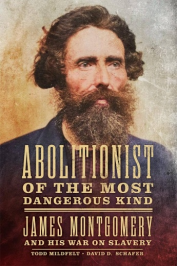
Abolitionist of the Most Dangerous
Kind/James Montgomery and his War on
Slavery. This
Baltimore CWRT meeting occurs on Tuesday,
July 28, 2026, at 7:30 p.m. The meeting will
be held the library of Hiss United Methodist
Church, 8700 Harford Road, Parkville Md.,
21234. (From the beltway (I-695) the church
will be on your right. Pull into the upper
parking lot-the lot just before the church
building- and walk to the semi-circle at the
front. Enter the first door on the right, go
up the stairs to the second floor and turn
left then right into the library (rm #208).
Todd Mildfelt
taught history, social studies, and science
in special education programs in
secondary schools. He researches and writes
about territorial Kansas, the Underground
Railroad, and African American
migration. Todd grew up in Richmond, Kansas
and majored in history at Pittsburg State
University. Todd lives in Baldwin, Kansas.
David D. Schafer
served as a park ranger for the National
Park Service for over three decades at
historic sites in Kansas, Hawaii, Missouri,
Oklahoma, Puerto Rico, and Texas. Dave grew
up in Richmond, Kansas and majored in
history at Pittsburg State University. Dave
lives in Stonewall, Texas. Dave was
stationed at the Harry S Truman National
Historic Site and from 2009 to 2013, was
stationed at Brown v. Board of Education
National Historic Site in Topeka. Dave
retired from the National Park Service in
2019.
Remember, the Baltimore Civil War Roundtable
will present authors
Todd Mildfelt and David Schafer discussing
their book
Abolitionist of the Most Dangerous
Kind/James Montgomery and his War on Slavery
on Tuesday, July 28. at 7:30 p.m. in the
library of Hiss United Methodist Church. We
urge you to attend in person. If you can’t,
register for the Zoom at: https://us02web.zoom.us/meeting/register/_svgkxPZQpees-J74cuJ0w
Minutes
This July we had two meetings–a makeup
meeting and our regular monthly meeting.
Our makeup meeting,
held on July 21, was our 503rd. The meeting
was held exclusively on Zoom and had 13
attendees. Our speaker was Ty Seidule, a
retired U.S. Army Brigadier General,
Professor Emeritus of History at West Point,
and holder of a Ph.D in history from Ohio
State University. Dr. Seidule, who had
previously spoken to the BCWRT in March
2021, had been scheduled to speak at our
April meeting but was unable to do so
because of the death of his father. Dr.
Seidule spoke on his book (coauthored with
Connor Williams) entitled
A Promise Delivered: Ten American Heroes and
the Battle to Rename Our Nation’s Military
Bases.
Dr. Seidule began by discussing his
background and how he became involved with
Civil War history in the public sphere. He
attended Washington and Lee University
(where he received his B.A.) and served in
the Army for 36 years. In 2015, he released
a five-minute video about the causes of the
Civil War. He soon found out that, as he
put it, “history is dangerous.” He received
death threats. He had struck a nerve by
challenging the myth of the Lost Cause. Dr.
Seidule characterized this myth as follows:
the Civil War was not fought over slavery,
slavery was benign with kind masters and
happy slaves, Reconstruction was worse than
the war itself, and Robert E. Lee was the
greatest human ever. He himself grew up
with these beliefs, and it was only as an
adult that he had an “epiphany,” as he put
it, and came to realize they were erroneous.
He described his personal transformation on
this issue in his 2021 book entitled
Robert E. Lee and Me: A Southerner’s
Reckoning with the Myth of the Lost Cause.
Dr. Seidule then addressed the issue of U.S.
Army base names. From 1861 to 1902, he
said, West Point viewed Confederates as
traitors–in fact, he stated that the
military oath to defend the nation against
“all enemies foreign and domestic” is
actually an anti-Confederate oath. During
the 20th century, however, nine Army bases
in the South were named after Confederate
generals, mostly during WWI and WWII. Dr.
Seidule strongly objects to American
military installations being named after
Confederates on the grounds that
Confederates committed treason in the
defense of slavery and killed U.S. soldiers
in the process. He referred to Robert E.
Lee as a “deserter.” Additionally, he said,
some of those who had bases named after
them–such as Braxton Bragg–were not even
good generals.
In 2021, Dr. Seidule was asked to serve on
the Naming Commission, which was tasked with
recommending alternative names for the bases
and for other military items commemorating
Confederates. The commission met in the
Academic Board Room at West Point and
selected nine U.S. military figures whom
they considered “real heroes” to rename the
bases after. For example, they recommended
that Fort Benning–named after Confederate
General Henry L. Benning–be renamed Fort
Moore, after Army Lieutenant General Hal
Moore and his wife Julia. Hal Moore was a
combat veteran of the Korean and Vietnam
wars and received multiple awards for his
service, including the Distinguished Service
Cross for his heroism in the battle of Ia
Drang in Vietnam. Julia was responsible for
the casualty notice system still in use by
the Army.
The work of the Naming Commission was not
limited to Army bases. Dr. Seidule said
that in 2022, there were 1,111 items
commemorating Confederates in the military,
while in 2024 there were zero. However, he
went on to say that he is not sure what the
figure is for 2026, because there have been
further developments during the second
Donald Trump administration. Secretary of
Defense Pete Hegseth has severely criticized
the Naming Commission, calling it a “sham,”
“crap,” etc. He ordered that the bases
revert to their original names–although they
are now officially named not after the
Confederates, they previously were, but
after U.S. military personnel who share the
same last names as those Confederates (Fort
Benning, for example, is now named after
Fred G. Benning, a WWI corporal who was
awarded the Distinguished Service Cross).
In 2026, however, the House Armed Services
Committee moved to counter Hegseth, voting
to change the names back to those
recommended by the Naming Commission. It’s
not clear if the new measure will ultimately
be adopted, however.
Dr. Seidule said that the total cost of the
name changes was under $20 million.
Our regular meeting, held on July 28, was
our 504th. Held
exclusively on Zoom due to dangerous
weather, it had 18 attendees.
Our speakers were Todd Mildfelt and David D.
Schafer. The two men spoke on Union Colonel
James Montgomery. They are the authors of
the book
Abolitionist Of The Most Dangerous Kind:
James Montgomery And His War On Slavery.
James Montgomery was–and remains–a
controversial, polarizing figure. He has
been seen by some as a vigilante and by
others as a freedom fighter. Many were
introduced to him through the 1989 film
Glory,
in which he is depicted as an antislavery
zealot trying to enrich himself. This
portrayal of Montgomery has been very
influential. Mr. Mildfelt and Mr. Schafer
argued that while it contains elements of
truth, the reality of Montgomery was more
complicated. On the surface he was a calm,
articulate man, but underneath that exterior
was a fierce antislavery fury.
Montgomery was born in Ohio on December 22,
1814. In his twenties and thirties, he
lived in Kentucky and then Missouri before
leading his (second) wife and six children
to Kansas Territory in 1854, where he became
a militia captain and an Underground
Railroad conductor.
Kansas Territory was created by the
Kansas-Nebraska Act of 1854. The act stated
that voters would decide whether slavery
would be permitted in the territory.
Initially, the proslavery forces held the
upper hand, but the antislavers created
their own legislature. In 1856, violence
broke out on a large scale, with the
territory becoming what became known as
”Bleeding Kansas.” Having settled in Linn
County on the Missouri border, Montgomery
evolved into a militant
abolitionist between 1856 and 1860. In
1858, he began operations with John Brown,
assisting Brown in the building of forts.
Brown’s raid on Harper’s Ferry in October
1859 (in which Brown was captured and, in
December, executed) proved to be hugely
significant, inspiring abolitionists and
infuriating white Southerners.
In August 1860, three months before the
election of Abraham Lincoln as president,
Montgomery had traveled to Boston, where he
networked with men and women who were
involved in the anti-slavery movement,
raising funds and getting resources for his
war in Kansas. After the Civil War broke
out, Montgomery became colonel of the 3rd
Kansas Infantry. He pioneered the use of
African American civilian teamsters at Forts
Leavenworth and Scott. In a few months, the
3rd Kansas liberated up to 1,000 slaves.
Chaplains found homes for the refugees.
This helped transform Kansas from being a
way station to freedom to being a freedom
destination itself.
In 1863 and 1864, Montgomery transferred his
war on slavery to the southeast Atlantic
coast. He strongly wanted to command
African American soldiers, and was given
command of the
2nd South Carolina Colored Infantry
(subsequently redesignated the 34th USCT).
Montgomery witnessed the transformation of
slaves into soldiers.
On June 2, 1863, in collaboration with
Harriet Tubman, Montgomery led the Combahee
River Raid in South Carolina. The raid
involved destruction but also
liberation–more than 700 slaves were freed.
Montgomery also led a more controversial
raid on the town of Darien, Georgia on June
11, and participated in the siege of Battery
Wagner from July to September. He commanded
a brigade composed of two African American
regiments–the 54th Massachusetts and the
35th USCT (formerly the 1st North Carolina
Colored Infantry) in the battle of Olustee
on February 20, 1864. This was the largest
battle of the war fought in Florida.
Although Olustee was a Union defeat,
Montgomery’s two regiments played an
important part in covering the retreat from
the battlefield.
In the summer of 1864, Montgomery returned
to Kansas. In the Battle of Westport,
Missouri (near Kansas City) on October 23 of
that year, he led the 6th Kansas State
Militia Regiment, composed of a mixture of
whites and African Americans. The battle
was a Union victory.
After the war, Montgomery returned to his
(at least) 752-acre farm in Linn County.
African Americans came to own much of the
land on both sides of his farm, becoming
some of the first black homesteaders. This
lasted well into the 20th century.
Montgomery died on his farm on December 6,
1871. He is buried in Woodland Cemetery in
Mound City.
|
|
Notes
from the President
It's hotter than July Is an old phrase used to describe July
being the hottest temperature period in the northern hemisphere.
Our recent weather at the start of this month proves that point,
it also marks the time of my annual viewing of the movies
Gettysburg and glory! (You may recall seeing the Baltimore civil
war roundtable acknowledged in the closing credits of
Gettysburg.) Some of you long-time members may remember seeing a
special screening of Gettysburg at the senator theater).
This July, our round table will feature a double header in
presentations! We will have a Special All Zoom meeting Tuesday,
July 21, at 7:30 p.m. Ret. Gen ty Seidule speaks on his new
book;
A Promise Delivered Ten American Heroes and the Battle to Rename
Our Nation’s Military Bases.
The book is an inspiring story behind the ten American heroes
whose names had been originally chosen by two members of the
Naming Commission charged with renaming the military bases named
for confederates. This is A rescheduled presentation you to the
death of general seidule’s father two months ago. Register for
the Zoom at
https://us02web.zoom.us/meeting/register/3VVi6W2yTKau2RMNAwYcOA
This well written book, published by McMillan, is available
through a number of platforms including amazon. Seidule co-wrote
the book with Connor Williams.
Our regularly scheduled Meeting Will take place on July 28, when
Authors Todd Mildfelt and David Schafer present Abolitionist
of the Most Dangerous Kind/James Montgomery and his War on
Slavery. It
would be an understatement to say that Jayhawker James
Montgomrty, an ally of John Brown, Charles Jennison and Senator
James Lane, was one of the nation’s most aggressive anti-slavery
and pro USCT supporters before and during the civil war.
We will be back at Hiss UM church for this meeting. Join us for
a very busy July!!
|
Meeting: June 23, 2026
Currently, there is a movie about World War
II’s D-Day invasion
called
Pressure. The
story is about the meteorologist who used
his skills to recommend to General
Eisenhower when the Normandy invasion could
take place because of the changing weather
patterns.
Join the Baltimore Civil War Roundtable on
Tuesday, June 23, 2026, at 7:30 p.m. as we
feature authors Jeffrey Harding and Jon Nese
discussing their book;
The Weather Gods Curse the Gettysburg
Campaign.
The meeting will be in the library of Hiss
United Methodist Church, 8700 Harford Road,
Parkville Md., 21234. (From the beltway
(I-695) the church will be on your right.
Pull into the upper parking lot-the lot just
before the church building- and walk to the
semi-circle at the front. Enter the first
door on the right, go up the stairs to the
second floor and turn left then right into
the library (rm #208).
The
Weather Gods Curse the Gettysburg Campaign analyzes
the impact of extreme weather—including a
severe June heatwave, high humidity, and
torrential rains—on the armies during the
Gettysburg Campaign (June-July 1863). The
authors combine historical soldier accounts
with modern meteorological research,
including NOAA re-analysis maps, to show how
heat, humidity, and flooding acted as a
"third army," affecting marches, combat, and
the Confederate retreat.
Jeffrey J. Harding is
a licensed battlefield guide at Gettysburg
National Military Park, independent
historian and leadership consultant. He
spent thirty-three years as an intelligence
analyst and professional development
specialist with the Office of Naval
Intelligence. He is the author of the highly
acclaimed
Gettysburg’s Lost Love Story: The Ill-Fated
Romance of General John Reynolds and Kate
Hewitt.
Jon M. Nese is
a professor in the Department of Meteorology
and Atmospheric Science at Penn State, where
he also oversees the undergraduate program.
Previously, he was chief meteorologist at
the Franklin Institute in Philadelphia and
on-air storm analyst at the Weather Channel.
He is the coauthor of
The Philadelphia Area Weather Book,
which was awarded the 2005 Louis J. Battan
Author’s Award from the American
Meteorological Society.
Remember, join the BCWRT as we host Jeffrey
Harding and Jon Nese presenting their book The
Weather Gods Curse the Gettysburg Campaign at
7:30 p.m. on Tuesday, June 23, 2026, at Hiss
United Methodist Church. If you can’t attend
in person, register for the Zoom at:
https://us02web.zoom.us/meeting/register/5xDmD1a3SNqiqcmqruXfGw
Minutes
Our June meeting was our 502nd. The meeting–held
exclusively on Zoom–had 21 attendees.
Our treasurer, Frank Armiger, submitted his report for
June 2026. On May 1, 2026, the beginning
balance for the BCWRT was $2,039.40. During
May, one members’ dues ($25) was deposited,
and an expense ($360) was incurred for
renting the room at Hiss United Methodist
Church that the roundtable uses for its
monthly meetings. This amount hadn’t been
paid during the transition between the death
of longtime treasurer Ray Atkins and the
election of Frank as his replacement. On
May 31, the closing balance was $1,688.40.
The BCWRT recorded three new members–Clifton Dawson and
Mr. and Mrs. Jonathan Peters.
Our speakers were Jon M. Nese, a professor in the
Department of Meteorology and Atmospheric
Science at Penn State, and Jeffrey J.
Harding, a historian and licensed
battlefield guide at Gettysburg National
Military Park. Both men spoke on weather
conditions during the Gettysburg Campaign.
Mr. Nese and Mr. Harding are the coauthors
of the book
The Weather Gods Curse the Gettysburg
Campaign. According to them, this is the first ever day by day
account of the weather for the entire
campaign.
Mr. Harding said that as a battlefield guide, he is often
asked: “What did it really feel like?” There
are a number of sources for the weather
during the Gettysburg campaign, including
first-hand accounts, “reconstructed” weather
maps, observations from the Naval
Observatory (a new source), and other
observations made in Harrisburg, Annapolis
etc. Many have discussed humidity during
the battle, but prior to Mr. Harding’s and
Mr. Nese’s book, nobody had tried to
quantify the humidity and estimate the heat
index.
During mid-June 1863, there was a very rare and extreme
heat wave in the area in which the
Gettysburg campaign took place. The
observations of Professor Michael Jacobs
formed the basis for the weather data.
Jacobs was part of the Smithsonian observer
network, which made observations three times
a day. But he didn’t measure humidity–there
is nothing under the “wet bulb” column of
his observation sheet. However, in
Harrisburg John Heisely and William Hickok
did
measure the wet bulb, and the humidity in Gettysburg was
about the same as it was in Harrisburg. At
the U.S. Naval Observatory, the temperature,
pressure, wet bulb, wind, cloud cover, and
“sun temperature” (as opposed to the
standard temperature taken in the shade)
were measured every three hours.
June 15-18 was the hottest and most oppressive period of
the campaign, with the temperatures and heat
indices in the area at historic highs.
Particularly bad was June 17, when the
temperature was 99 degrees and the heat
index was 117. Moreover, direct sunlight
can add 10-15 degrees to the heat index–so
on June 17 it could have felt like more than
130 degrees in the sun!
Looking at the weather for the battle of Gettysburg
itself, Mr. Nese and Mr. Harding said that
on July 2, the heat and humidity were much
worse than suggested by the 81 degrees
reported by Jacobs. The 15th Alabama, the
regiment that fought the 20th Maine at
Little Round Top, had marched 28 miles to
arrive at Gettysburg, and when they fought
the heat index was far worse than previously
imagined–as high as 90 degrees. On July 3,
during what’s commonly referred to as
“Pickett’s Charge,” the heat index was
around 100 degrees even in the shade. Many
men fell out of the ranks due to heatstroke.
During the Confederate retreat from Gettysburg, no
official weather observations were made in
the retreat area. However, personal
accounts by soldiers indicate there was
significant rain. Unfortunately, we don’t
have a record of how much rain fell in the
region during July 1863–we only have one for
the entire year of 1863. However, it is
estimated that 3 to 4 inches of rain fell in
the area of the retreat during July 4-8.
|
|
Notes
from the President
First and foremost, I wish to thank all of you who attended last
month's meeting in person. It was among the largest turnouts
that the roundtable has experienced Since we returned to in
person meetings in October of 2022, after the pandemic. 11
attendees made the largest we’ve had since our move to Hiss um
church. We used to regularly have 50 to 75 zoom participants
when covid caused a stoppage in live meetings.
Let us build upon this Boost in activity. In person attendance
allows us to fully utilize the book raffle, enhance camaraderie
and justify our payments for using the church.
Indeed, attendance can also influence the speaker fees. Some
authors adjust their fees depending on the number of books they
may be able to sell. We recently had an author request to speak
via zoom rather than traveling to appear before a handful of
attendees.
It is up to you, as BCWRT members, to build up our organization.
You can become more involved by actively spreading the word
about what we do. Invite friends. Take the lead on developing
ideas and group activities. Print our schedule and share it with
your churches, social groups, family, neighbors, etc.
Need a gift idea for someone. Gift them membership in the BCWRT.
This can be done by sending a check to our treasurer, frank
Arminger. Please mail a check to; Frank Armiger, treasurer
BCWRT, 42 Norwick Circle, Timonium. MD. 21093, 410-591-9977. Or
farmiger@verizon.net using Zelle. Membership is $25 or $35 for
families.
|
Meeting: May 26, 2026
PLEASE ATTEND IN PERSON (if you can). Our
speaker is coming from Lancaster, Pa. Surely
you can come a few miles.
September 11, 1851, an armed confrontation between
people, mainly from Maryland, occurred about
20 miles north of the Maryland /Pennsylvania
border. Commonly called
The Christiana Resistance, this
action between self-emancipated Blacks and
slave owners/supporters made national
headlines and became one of those
contributing factors leading up to the
American Civil War a decade later.
Learn details about this historical event by
joining the Baltimore Civil War Roundtable
as we host history Interpreter, reenactor
and
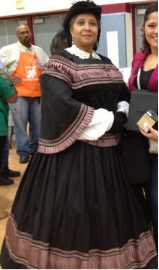
Christiana Resistant descendant Darlene
A. Colon
on Tuesday May 26, 2026, at 7:30 p.m. The
meeting will be in the library of Hiss
United Methodist Church, 8700 Harford Road,
Parkville Md., 21234. (From the beltway
(I-695) the church will be on your right.
Pull into the upper parking lot-the lot just
before the church building- and walk to the
semi-circle at the front. Enter the first
door on the right, go up the stairs to the
second floor and turn left then right into
the library (rm #208).
Darlene Colon is
the current President of the Christiana
Historical Society and a direct descendant
of one of the participants in the 1851
Christiana Resistance. She is also the Vice
President of the United States Colored
Troops Institute which is based at Hartwick
College in Oneonta, NY and Founding member
and Past President of the African American
Historical Society of South-Central
Pennsylvania.
Darlene Colon also
conducts genealogy workshops, as well as
performs 1st person
interpretations of the only known female
Buffalo Soldier, Kathay Williams in addition
to local Lancaster businesswoman Lydia
Hamilton Smith.
A resident of Lancaster,
Darlene Colon is
a member of the Pennsylvania Past Players, a
living history group created by the Cultural
and Heritage Tourism Office of the
Pennsylvania Bureau of Tourism.
Demonstrating her ability to engage and
share what she knows, she speaks about her
great-great-grandfather, Abraham Quamony, as
if she knew him and recites his service
record with ease: A resident of Conestoga,
he was born in March, 1837. He enlisted in
the 24th Regiment on February 13, 1865 at
Philadelphia, probably at Camp William Penn.
He became a corporal and he saw service
around the Virginia, Maryland and District
of Columbia area. Abraham Quamony was
mustered out of service in October, 1865.
Ms. Colon’s great-great
uncle, John Thompson who lived in Colerain
Township, Lancaster, became a member of the
3rd USCT, Company B. He enlisted in June
1863,
Ms. Colon says,
and was the son of Ezekiel Thompson, one of
the resistance fighters at Christiana in
1851. The so-called Christiana
Resistance/Uprising are believed by many,
Ms. Colon suggested,
to be one of the most important moments in
history leading to the Civil War.
Remember, join the BCWRT as we host
Darlene A. Colon in
a discussion about the Christiana
Resistance
at 7:30 p.m. on Tuesday, May 26, 2026, at
Hiss United Methodist Church. If you can’t
attend in person, register for the Zoom at:
https://us02web.zoom.us/meeting/register/LbwmvGefTwegy2qEPONdDQ
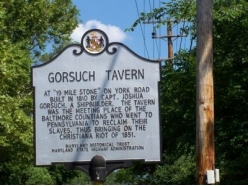
Gorsuch Tavern marker on York Road
Darlene A. Colon
Minutes
Slides from meeting >>
Resistance_at_Christiana.pdf
Our May meeting was our 501st. The meeting
had 11 in-person attendees and 5 attendees
on Zoom.
Our speaker was Darlene Colón.
A historian from Lancaster, Ms. Colón
had previously given a presentation to the
BCWRT in June 2018, portraying Lydia
Hamilton Smith. This time, she spoke on the
violent confrontation in Pennsylvania known
as the Christiana Resistance. Occurring on
September 11, 1851, in the borough of
Christiana, Pennsylvania, this was
“America’s first 9/11.” Ms. Colón
is the current President of the Christiana
Historical Society and a direct descendant
of one of the participants in the
Resistance.
The Fugitive Slave Law, passed in 1850,
allowed slave owners in the South to come to
free states in the North to search for
escaped enslave people. In addition, the
law not only made aiding or sheltering
fugitives a crime but also allowed citizens
in the North to be “deputized” against their
will to aid in the search for the fugitives.
In Lancaster County, a group known as the
Gap Gang made money stealing things and
cattle–and people. On the lookout for new
African American faces, they would kidnap
these individuals and sell them into
slavery. William Parker, an African
American who had come to Christiana from
Maryland and been hired by Quakers,
established a protection group to counter
the threat. Parker and his men discovered
the route used by the Gap Gang, and when
someone went missing, they overtook the gang
and freed the kidnapped person.
In 1851, the Gap Gang told Edward Gorsuch
that they could recover his “property”
--four of his slaves who had escaped from
Maryland and fled to Christiana. In
September, Gorsuch came to Philadelphia and
obtained a warrant for the arrest of the
men. However, he and a group of men aiding
him were being watched by Samuel Williams,
an agent for William Still, a prominent
Philadelphia businessman. Still told
Williams to go to Christiana and deliver a
warning, and Williams arrived in the town
ahead of the Gorsuch party.
At 4 AM on September 11, the Gorsuch party
arrived at the Parker House. Parker’s wife
started blowing a horn. This was heard by
Quakers; they approached the property and a
marshal tried to deputize them. People with
guns came and a fight broke out. Gorsuch
was killed and his son Dickinson was injured
(Dickinson was found in a field with
birdshot; he subsequently recovered and
supported the Union during the Civil War).
Guards surrounded the house, trapping
Parker.
When the guards fell asleep, Parker was
given Quaker clothing and left. Militia
arrived and took the African Americans and
Quakers to Philadelphia, where they were
charged with treason.
Thaddeus Stevens came to Philadelphia to
defend them and recruited Lucretia Mott.
Mott had all 35 African American men dress
in special clothing, making it impossible to
identify who had been at the Parker house.
In the end, none of the defendants were
convicted. Thomas Gorsuch, another son of
Edward, had not been permitted to join the
manhunt. Thomas’s boarding school roommate
and best friend was John Wilkes Booth, who
reportedly vowed revenge for what happened.
Meanwhile, Parker went to Rochester, N.Y.,
where Frederick Douglass (an old friend of
Parker’s who had been on the same plantation
as him in Maryland) helped him escape to
freedom in Canada.
In 2001, descendants of Gorsuch and Parker
held a reunion. Milton Inn, on York Road,
is the site of Thomas’s boarding school.
Additionally, there’s a marker at Gorsuch
Tavern on York Road near Sparks Glencoe, as
well as one on Lower Valley Road in
Christiana.
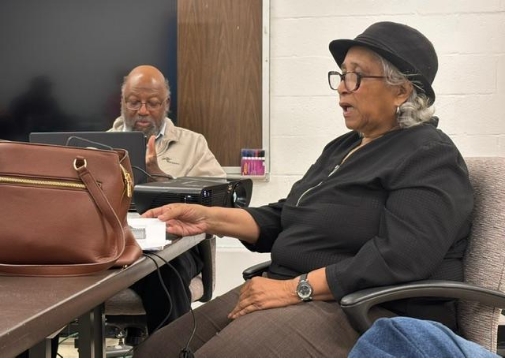
Darlene Colon at BCWRT
|
|
Notes
from the President
Spring has sprung or so it seems. The very The temperature makes
it seem, At times, like winter is still here. What's crazy is
that the most recent forecast that I hear is predicting summer
like temperatures this month1 Imagine how the civil war
combatants dealt with those crazy changes in the weather.
Last month we had a change in our meeting plans due to the
unfortunate death of general Ty Seidule’s father. We will
reschedule with general Seidule as soon as possible. If needed,
we may do two meetings in one month.
We thank all of you who provided suggestions for increasing our
roundtable membership at last month's Unplanned business
meeting. The board will look into implementing some of those
suggestions. If you have any additional ideas, please let me
know at
Rfordjazz@yahoo.com.
We urge you to attend our May 26 meeting in person. Darlene
Colon will make a presentation on the 1851 Christiana
resistance. If you've ever driven along York Rd. In Baltimore
County you may have seen a commemorative sign for the gorsuch
Tavern. The gorsuch family, William Parker and many others from
Maryland played an important role in this southern Pennsylvania
action against the 1850 fugitive slave act.
Darlene Cologne was with us a few years ago when she gave her
first person interpretation ohh civil war activist Lydia
Hamilton Smith. Lydia Hamilton Smith Lydia Hamilton Smith.
Remember, as well as sending your membership checks to our
treasurer frank arminger, 42 Norwick Circle, Timonium. MD.
21093. you can also Pay for your membership with an electronic
transfer through the zelle platform. Our zelle e-mail is
farmiger@verizon.net. Yearly membership is $25 per individual
and $35 per family.
|
Meeting: April 28, 2026 ** To be rescheduled at a later date **
“Seldon do
politicians use twenty seconds of personal
politicking to
erase months of bipartisan triumph. But on June
10, 2025, President Donald Trump did just that.
At stake were the names of Army bases that
once honored Confederates. In 2020, Congress
reaffirmed what their predecessors knew
during the Civil War itself: Confederates
did not deserve military commemoration. They
committed treason to try to dissolve the
United States and create an entirely and
eternally enslaved nation. “
Preface of
A Promise Delivered Ten American Heroes and
the Battle to Rename Our Nation’s Military
Bases by
Ty Seidule and Connor Williams.
Retired General Ty Seidule will
discuss the aforementioned book with the
Baltimore CWRT audience on Tuesday, April
28, 206 at 7:30 p.m. The book focuses on the
lives of the 10 individuals whose names were
chosen by the bipartisan Congressional
Naming Commission in renaming nine US army
bases. The meeting will be held the library
of Hiss United Methodist Church, 8700
Harford Road, Parkville Md., 21234. (From
the beltway (I-695) the church will be on
your right. Pull into the upper parking
lot-the lot just before the church building-
and walk to the semi-circle at the front.
Enter the first door on the right, go up the
stairs to the second floor and turn left
then right into the library (rm #208).
Ty Seidule is
a retired United States Army brigadier
general, historian, and author known for his
work dismantling the "Lost Cause" myth of
the Confederacy. He is currently the
Professor Emeritus of History at West Point
and a professor at Hamilton College.
Holder of a Ph.D. from The Ohio State
University and a B.A. from Washington and
Lee University, in 2021,
Seidule was
appointed by the Secretary of Defense in
2021 as Vice Chair of the commission tasked
with renaming Department of Defense assets
that honor the Confederacy.
Seidule served
for 36 years in the U.S. Army before
retiring in 2020. His service included
command and staff positions in Germany,
Italy, Iraq, Saudi Arabia, and the Balkans,
Leadership as a tank platoon leader and
later a cavalry troop commander in the 82nd
Airborne Division during the Gulf War. He
headed the History Department at West Point
for nearly two decades.
Dr. Seidule last
appears before the BCWRT in March of 2021 to
present his book
Rober E. Lee and Me.
Remember, Baltimore Civil War Roundtable
will present, via Zoom, General Ty Seidule
(Rt.) discussing his book; A
Promise Delivered Ten American Heroes and
the Battle to Rename Our Nation’s Military
Bases on
Tuesday, April 28. at 7:30 p.m. in the
library of Hiss United Methodist Church. We
urge you to attend in person. If you can’t,
register for the Zoom at https://us02web.zoom.us/meeting/register/HfayRKx6RrirTAbV0OrgZA
Minutes
Our April meeting was our 500th. The meeting had 4
in-person attendees and 14 attendees on
Zoom.
Our speaker was scheduled to be Ty Seidule. A retired
Army brigadier general and holder of a Ph.D
in history from Ohio State University, Dr.
Seidule spoke to the BCWRT in 2021 about his
book
Robert E. Lee and Me: A Southerner’s
Reckoning with the Myth of the Lost Cause. This April he was scheduled to speak on his book
A Promise Delivered: Ten American Heroes
and the Battle to Rename Our Nation’s
Military Bases. However, Dr. Seidule was unable to attend the meeting
due to a death of his fathyer. Instead of
a presentation, we discussed strategies for
increasing BCWRT membership.
Since the pandemic, attendance at meetings–both in person
and on Zoom–had dropped dramatically.
President Robert Ford spoke about his
participation in a Civil War roundtable
survey. The Richmond Civil War Round Table
has about 140 members, compared to only
about 35 for the BCWRT. Moreover, Treasurer
Frank Armiger said that as of the meeting
date–April 28–only about 20 people had paid
their dues. On average, about half the
members–18 or so– attend meetings, either in
person or online. Our honorarium for
speakers varies between $50 and $75, and we
don’t normally give speakers money for
lodging or gas mileage.
It was decided to do a survey of people who used to attend
meetings but no longer do so. Another idea
was to target history professors (perhaps
getting the newsletter to history
departments at colleges). Students could
get reduced membership fees and/or extra
credit for attending a meeting. Board
Member Olivia Bourland mentioned Meetup
groups–the group
Profs and Pints meets at bars, with a fee of $13.50 to attend one
meeting. Frank suggested doing
presentations at senior centers like Oak
Crest Senior Living Community and the Waxter
Center and inviting the audience to become
members. He also said that the BCWRT should
become a 501(c)(3) organization and work on
fundraising.
The CWRT Congress puts out notifications of events and
tries to help Civil War roundtables.
Webmaster Nils Lehneis suggested using “Dr.
Google” to find helpful advice. Robert said
that a Program Director position will be put
into the bylaws.
|
|
Notes
from the President
April was a pivotal time throughout the civil war. The
bombardment of Fort Sumter, which began The hostilities,
occurred in April of 1861. The first bloodshed including deaths,
Happened right here in Baltimore during that same April. 1862
saw the costly battle of shallow and the abolishment of slavery
in the nation's capital.
general grant’s Vicksburg campaign everything on the IHOP value
in general Lee’s Chancellorsville campaign all begin in April of
1863. Senate passage of the 13th amendment of the constitution,
the beginning of the Red River campaign And the Fort pillow
massacre occurred the following April. Lastly, the fall of
Richmond, Lee's capitulation to grant and the Lincoln
assassination forever immortalized April of 1865.
On April 28, the Baltimore civil war roundtable we'll have
retired general Ty Seidule speak on his book;
a promised delivered 10 American heroes in the battle to rename
our nation’s military bases.
The book which was published by Saint Martin’s press, Is
currently available for order through Amazon.
Remember: our roundtable needs our members to start coming out
and joining our meetings in person, again. Additionally, we need
to find ways to expand our membership. Please start talking
about the roundtable with your friends and relatives. Invite
them to attend a meeting with you.
If you have any ideas on how we can grow as a group, please send
me your suggestions. My e-mail is
rfordjazz@yahoo.com.
Remember, as well as sending your membership checks to our
treasurer frank arminger, 42 Norwick Circle, Timonium. MD.
21093. you can also Pay for your membership with an electronic
transfer through the zelle platform. Our zelle e-mail is
farmiger@verizon.net.
Yearly membership is $25 per individual and $35 per family.
|
Meeting: March 24, 2026
Maryland women played a variety of roles during
the Civil War. Some are well known, like the
Eastern Shore born activist Harriet Tubman
and Anna Ella Carroll. Others have lesser
fame, like the group of the southern
sympathizers known as the Monument Street
Girls.
Join the Baltimore Civil War Roundtable as
we host Baltimore City archivist
Rob Schoeberlein for
his presentation of
Maryland Women during the Civil War.
Our tribute to Women’s History Month will be
held on Tuesday, March 24, at 7:30 p.m. in
the library of Hiss United Methodist Church,
8700 Harford Road, Parkville Md., 21234.
(From the beltway (I-695) the church will be
on your right. Pull into the upper parking
lot-the lot just before the church building-
and walk to the semi-circle at the front.
Enter the first door on the right, go up the
stairs to the second floor and turn left
then right into the library (rm #208).
Rob Schoeberlein is
the Baltimore City Archivist and a Trustee
of the Maryland Center for History and
Culture, where he chairs the Library
Committee and is a member of the
Publications Committee. He earned his Ph.D.
in American Studies from the University of
Maryland College Park and has more than 30
years of research and archives experience.
He has published topics ranging from
Baltimore Civil War era history to 20th
century reform movements. His book chapter
in The
Civil War in Maryland Reconsidered (2021)
is an overview of women's wartime and
post-wartime activities. Tonight, he will
recount their efforts, ranging from nursing
care and charitable work to smuggling and
spying, with the tales of a few female
soldier stories added as well.
Rob is a native Marylander and lives in
Howard County.
Remember, Baltimore Civil War Roundtable
will host Baltimore City archivist
Rob Schoeberlein for
his presentation of
Maryland Women during the Civil War on
Tuesday, March 24, at 7:30 p.m. in the
library of Hiss United Methodist Church. We
urge you to attend in person. If you can’t,
register for the Zoom at
https://us02web.zoom.us/meeting/register/tfSwsQOUQLSUGyynKrNFiQ.
Once registered, you will receive an email
with a link to the presentation.
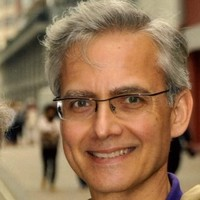
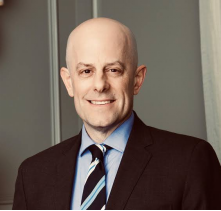
Rob Schoeberlein
Minutes
Our March meeting was our 499th. The meeting had 7
in-person attendees (including the speaker)
and 10 attendees on Zoom.
Our speaker was Dr. Robert W. Schoeberlein, an archivist
with the Baltimore City Archives. The topic
of Dr. Schoeberlein’s presentation was
“Sisters in Conflict: Baltimore Women and
Benevolence During the Civil War.”
The Civil War profoundly divided the women of Baltimore,
just as it divided the city as a whole.
Women supported both sides of the war in
multiple ways, including conducting
fundraising fairs, working as nurses,
providing food, etc. Women on both sides
also made battle flags.
Many Baltimore citizens gave aid to Union soldiers passing
through the city. Some gave shelter to
Pennsylvania troops during the riot on April
19, 1861. When Benjamin Butler came to the
city, American flags were flying all over.
Following the arrest of pro-Southern
legislators, in June 1861 Maryland conducted
a special election to choose new
representatives to the Maryland General
Assembly. The number of voters was far
smaller than usual, to the great advantage
of the Unionists.
By the end of June, there was a Union Relief Association.
The association eventually included
facilities including a kitchen, dining
halls, and an infirmary. At the National
Hospital (across from Camden Street Railroad
Station), as well as Newton University
Hospital, pro-Union women worked as nursing
aides and provided entertainment. They
also formed relief associations. Elizabeth
Graham was involved with relief rooms and
organized sociables. She contracted “camp
fever” and almost died. There was also a
Union Reading Room where men could go and
read magazines and other publications.
According to Dr. Schoeberlein, the core of African
American military recruits from Baltimore
were men who had been arrested and given
shovels, and made to labor on
fortifications. There was a Colored Ladies
Union Association and a First Colored
Christian Commission. The Fourth USCT
Infantry was recruited in the summer of
1863, and the women of Bethel AME Church
assisted in the creation of the regimental
flag.
In 1863, some Baltimore women decided that there should be
a fair for sick and wounded Union soldiers.
Supplies came into Baltimore from most of
Maryland. At the Maryland Institute, the
Baltimore Sanitary Fair was held over a
fifteen-day period and about $83,000 was
netted. In November 1864, the Colored State
Union Fair was held at Bethel AME Hall.
Frederick Douglass was a speaker, and the
women raised about $1,800, a respectable
amount under the circumstances.
Dr. Schoeberlein said that a majority of wealthy
Baltimoreans sympathized with the
Confederacy. Many women greeted Confederate
POWs with cakes and other food and
supplies–something that was hated by the
U.S. authorities. Pro-Confederate women
presented flags to Maryland Confederate
regiments and to a company of the 21st
Virginia Infantry which consisted mostly of
Baltimoreans. Jennie Cary put the
pro-Confederate song “Maryland, My
Maryland” to music and also (with her sister Hetty and
cousin Constance) sewed the first
Confederate battle flag. Matilda Saunders
was among those who smuggled supplies to
Confederate soldiers.
In 1866, after the war had ended, hundreds of
pro-Confederate women banded together to aid
impoverished Southerners. The result was
the Southern Relief Fair. Many items were
raffled off, including some relating to
George Washington. A total of about
$160,000 was raised. In 1867, the Ladies
Depository was formed to help people in the
South.
|
|
Notes
from the President
The old phrase says ‘March comes in like a lion and goes out
like a lamb’. There are many traditions on which that phrase is
based including English folklore, ancestral beliefs of early
balance and astronomical Cycles. According to astronomy, the
constellation Leo the lion is prominent on the eastern horizon
at sunset at the start of March. By the end of March, the
constellation Aries the ram (Often associated with a lamb) is on
the western horizon at sunset.
Considering the extreme weather we have been experiencing
lately, You can only imagine what the soldiers experienced
during the civil war. Personally, I've never experienced Warm
weather followed by tornadic activity followed by snow. I
suppose the soldiers did look forward to spring.
As we slowly move to warmer weather, our roundtable needs our
members to start coming out and joining our meetings in person,
again. Additionally, we need to find ways to expand our
membership. Please start talking about the roundtable with your
friends and relatives. Invite them to attend a meeting with you.
If you have any ideas on how we can grow as a group, please send
me your suggestions. My e-mail is
rfordjazz@yahoo.com.
Remember, as well as sending your membership checks to our
treasurer frank arminger, 42 Norwick Circle, Timonium. MD.
21093. you can also Pay for your membership with an electronic
transfer through the zelle platform. Our zelle e-mail is
farmiger@verizon.net.
Yearly membership is $25 per individual and $35 per family.
|
Meeting: February 24, 2026
In August of 1862, Senator James Lane
organized and recruited the 1st Kansas
Colored Infantry Regiment. They became the
first African American regiment to fight in
the Civil War when they defeated rebel
forces during the skirmish at Island Mound,
Missouri in October of 1862, a half year
before the formation of the United States
Colored troops (USCT).
The regiment was nearly decimated when they
were ambushed by confederates in the Battle
of Poison Springs in April of 1864. Join the
Baltimore Civil War Roundtable as Temple
University
Prof. Dr. Greg Urwin
presents "Cut
to Pieces and Gone to Hell: The Poison
Spring Massacre"
at our February
meeting.
The meeting will be held on Tuesday,
February 24, at 7:30 p.m. in the library of
Hiss United Methodist Church, 8700 Harford
Road, Parkville Md., 21234. (From the
beltway (I-695) the church will be on your
right. Pull into the upper parking lot-the
lot just before the church building- and
walk to the semi-circle at the front. Enter
the first door on the right, go up the
stairs to the second floor and turn left
then right into the library (rm #208).
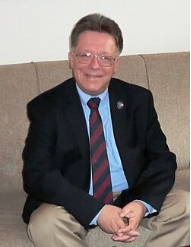
Dr. Gregory J. W. Urwin is
a professor of military history at Temple
University and the author of several books
and articles. He has been at Temple
University since 1999. Born in Cleveland,
Urwin graduated from Borromeo Seminary High
School in 1973. He graduated summa cum laude
from Borromeo College of Ohio in 1977,
received a Master of Arts degree from John
Carroll University in 1979, and earned a
Master of Arts from the University of Notre
Dame in 1981. He also received a Ph.D. from
Notre Dame. He wrote his doctoral
dissertation on “The Defenders on Wake
Island".
Among
Dr. Urwin’s achievements
are: Former General Editor, Campaigns and
Commanders Series, University of Oklahoma
Press; Senior Fellow, Foreign Policy
Research Institute; Fellow, Company of
Military Historians: The Company of Military
Historians – Exploring the material culture
of the military in the Americas from
Pre-Columbian times through the War on
Terror. His Latest Podcast: Gettysburg: What
the Filmmakers Got Right and Wrong with
Historian Gregory J.W. Urwin – YouTube. His
latest Digital Publication: The Yorktown
Tragedy: Washington's Slave Roundup -
Journal of the American Revolution. An
Excerpt from Urwin’s Latest Documentary: The
Heroic First Black Regiment of the Civil War
| Black Patriots: Heroes of the Civil War is
on YouTube.
Remember, join the BCWRT as
Dr. Gregory J.W. Urwin presents
"Cut to Pieces and Gone to Hell: The Poison
Spring Massacre"
at 7:30 p.m. on Tuesday, February 24, 2026,
at Hiss United Methodist Church. If you
can’t attend in person, register for the
Zoom at:
https://us02web.zoom.us/meeting/register/wtUg108eS9OkSAJRcpf0NQ
Minutes
Our February meeting was our 498th. The meeting was
exclusively on Zoom and had 16 attendees.
However, because the speaker did not attend
due to a scheduling mix up, the meeting
ended after a half hour and was rescheduled
for March 3. During the half hour, members
discussed various Civil War related events
that took place in late February.
The March 3 meeting, again exclusively on Zoom, had 14
attendees. Our speaker was Dr. Gregory
Urwin. The topic of Dr. Urwin’s presentation
was: “Cut to Pieces and Gone to Hell: The
Poison Spring Massacre.”
Between March 23 and May 3, 1864, Union Major General
Frederick Steele (with a total of roughly
9,000 men) led the Camden Expedition through
Arkansas. Steele intended to join Major
General Nathaniel Banks at Shreveport,
Louisiana for the Red River Campaign.
Steele’s men reached the city of Camden on
April 15. The reaction of Camden’s
population was very divided–most slaves
rejoiced while most whites were frightened.
By this point, the men were quite
hungry–they had been on half rations for
some time. In addition, they needed forage
for their livestock. Having learned that
bushels of corn were located relatively
nearby, Steele dispatched a force to capture
them, led by Colonel James M. Williams of
the 1st Kansas Colored Infantry.
Largely composed of former slaves from Missouri and
Arkansas, the 1st Kansas had been the first
African American regiment in the Union army
to see combat during the war. When it
embarked on the forage expedition, the
regiment had only rested for 15 out of the
previous 78 hours. Williams’ forces also
included the 18th Iowa and other units,
totaling 1,169 men. To oppose Steele’s
force was 3,621 Confederate cavalry and
artillery organized by Brigadier General
John Marmaduke. A division under Brigadier
General Samuel Maxey included the 2nd Indian
Brigade, which contained two regiments of
Choctaw Indians, totaling 680 men.
Confederates managed to burn many (not all)
of the bushels before Steele’s men could
reach them.
The Battle of Poison Spring occurred on April 18, 1864. At
first, Williams thought he was only facing a
relatively small number of Confederates, but
he subsequently became aware that a larger
number were approaching and that his men
needed to be redeployed. Major Richard Ward
formed the 1st Kansas in an L-shaped line to
protect the forage train. Although the
regiment became caught in a crossfire, with
three Confederate batteries concentrating
their fire on its center, the men remained
cool. After 30 minutes, the artillery fire
slackened and a Texas brigade under Charles
DeMorse approached the 1st. The men of the
1st took aim at them with buck and ball and
held firm.
The Texans attacked a second time. This time the 29th
Texas Cavalry, one of De Morse’s regiments,
recognized the 1st Kansas–the two regiments
had fought each other at the Battle of Honey
Springs (in the Indian Territory) on July
17, 1863, which was a Union victory. After
15 minutes, the Texans were again beaten
back. However, a third, well-coordinated
attack slammed into the regiment, which was
now facing four brigades. The 1st had its
line broken and retreated through the forage
train, which the Choctaws surged forward to
loot. Detachments of three regiments of
Kansas cavalrymen (the 2nd, 6th and 14th)
likewise retreated, and in doing so left
dangerous gaps in Williams’ line.
In the aftermath of the battle, a massacre occurred.
Confederates killed wounded members of the
1st Kansas on the field, with some members
of the 29th Texas yelling: “Where is the
First Kansas Nigger now?” and other members
responding: “All cut to pieces and gone to
hell by bad management!” The Choctaws
stripped and scalped wounded African
American soldiers. This massacre has gone
down as the worst example of racial violence
in Arkansas history and stands as the most
enduring legacy of Poison Springs. In
addition to a desire on the part of the
Texans for revenge for Honey Springs, Dr.
Urwin said, white Southerners in general
believed that African Americans were savages
who needed to be controlled by violence.
Total Union casualties were 301 killed, wounded, and
missing, 182 of which were suffered by the
1st Kansas Colored. Of the 182, 117 were
killed–a figure which itself indicates that
something unusual happened (Civil War units
virtually always lost far more wounded than
killed in a battle, not the other way
around). Confederate casualties were
estimated to be under 145.
For Steele’s command, the loss of the forage train meant
prolonged hunger. On the evening of April
26, Steele withdrew from Camden. In the
Battle of Jenkins’ Ferry, on April 30, the
Federals were victorious. During the
battle, the 2nd Kansas Colored Infantry
avenged their 1st Kansas comrades. Together
with the 29th Iowa, the regiment
successfully charged a Missouri Confederate
artillery battery and bayoneted captured
artillerymen. Later, members of the 2nd
Kansas wandered the battlefield, shooting or
cutting the throats of wounded Confederates.
|
|
Notes
from the President
During the American Civil War, it was not uncommon for the
warring armies to settle into winter quarters during the bleak
cold months. After the union army's defeat at the battle of
Fredericksburg in December of 1862, the armies of Robert E Lee
and Ambrose Burnside bivouacked miles apart from each other
without much fighting. Plans for attacks were thwarted by the
ice, snow and mud In Northern Virginia.
Hopefully, we at the Baltimore civil war round table we'll be
able to move about and not suffer from the lingering ice which
forced last month's meeting to be totally virtual.
Since 1866, many Areas of the country began to annually
celebrate the birthday of Abraham Lincoln (02/12/1809) following
his assassination. Beginning in the 1890s, many black
communities began celebrating the birthday of Frederick Douglass
(02/14?/1818). In February of 1926, historian Carter G Woodson,
founder of the association for the study of African American
life and history (ASALH) Established negro history week as an
annual celebration to focus On yearlong studies of the
contributions of the “countless Black men and women who had
contributed to the advance of human civilization.” Beginning
1976, President Gerald Ford expanded the celebration to Black
History Month.
Although the BCWrt Never limits it's study of the contributions
of African American men and women during the civil war to one
month, we’d like to point out Some significant occurrences for
this month. Join us on February 24th at 7:30 PM when Temple
University professor Gregory Erwin presents
“cut to pieces and gone to
hell: The Poison Spring Massacre".
The story is one of the chapters in the history of the first
Kansas colored infantry, The first black regiment to engage in
battle during the civil war.
It is also noteworthy to point out a couple of articles in our
newsletter “the old liner”,
One of which focuses on a new trail at the new market heights
battlefield. 14 African American soldiers received the Medal of
Honor as a result of that battle, including five from the state
of Maryland!
|
Meeting: January 27, 2026
The American Civil War was the focal point
of many firsts in
our history. One of those firsts was the
creation of the Medal of Honor. Amazingly,
only one woman has been awarded the Medal of
Honor and that was the only female surgeon
serving the United States Army,
Dr. Mary Edwards Walker.
This pioneering woman is the subject of the
Baltimore Civil War Roundtable’s February
meeting as
Dr. Theresa Kaminski presents
a lecture on her book; speaks on her book; Dr.
Mary Walker's Civil War: One Woman's Journey
to the Medal of Honor and the Fight for
Woman's Rights.
The meeting will be held on Tuesday, January
27, at 7:30 p.m. in the library of Hiss
United Methodist Church, 8700 Harford Road,
Parkville Md., 21234. (From the beltway
(I-695) the church will be on your right.
Pull into the upper parking lot-the lot just
before the church building- and walk to the
semi-circle at the front. Enter the first
door on the right, go up the stairs to the
second floor and turn left then right into
the library (rm #208).
Theresa Kaminski,
Ph.D. is a professor emerita of history from
the University of Wisconsin-Stevens Point.
As an author, she specializes in writing
about scrappy women in American history.
In 2020,
Theresa published
; Dr. Mary Walker's Civil War: One Woman's
Journey to the Medal of Honor and the Fight
for Woman's Rights . Her
most recent book,
Queen of the West: The Life and Times of
Dale Evans,
was released in April 2022. She is also the
author of a trilogy of books about American
women in the Philippine Islands, including
Angels of the Underground.
Theresa is currently working on a book about
Jane Grant, a feminist, writer, and
co-founder of The New Yorker magazine.
Remember, join the BCWRT as
Dr. Theresa Kaminski presents;
Dr. Mary Walker's Civil War: One Woman's
Journey to the Medal of Honor and the Fight
for Woman's Rights. at
7:30 p.m. on Tuesday, January 27, 2026, at
Hiss United Methodist Church. If you can’t
attend in person, register for the Zoom at:
https://us02web.zoom.us/meeting/register/zk2m3YUkTmKZAGH2Fq92rw
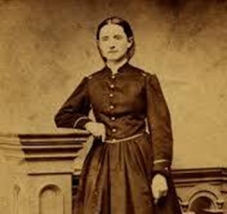 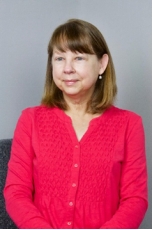
Dr. Mary E. Walker
Dr. Theresa Kaminski
Minutes
Our January meeting was our
497th. Due to unfavorable weather
conditions, the meeting was Zoom only.
There were 15 attendees.
Our speaker was Dr. Theresa
Kaminski, a professor emerita of history
from the University of Wisconsin-Stevens
Point. Dr. Kaminski spoke on her book
entitled
Dr. Mary
Walker’s Civil War: One Woman’s Journey to
the Medal of Honor and the Fight for Women’s
Rights.
Mary Walker (1832-1919) was the
only female surgeon in the Union army. Born
in Oswego, New York, her parents were
freethinkers and only nominally Christian.
Growing up, Walker was very aware of the
women’s rights and abolitionist movements as
well as reforms in public education,
including increased opportunities for girls.
Additionally, she became attracted to the
dress reform movement, which promoted the
idea that the ability of women to dress as
they pleased was important to their being
equal members of society.
As a teenager, Walker decided to
become a doctor. She faced a serious
obstacle–very few medical schools admitted
women at the time. However, she was
accepted into Syracuse Medical College and
attended from 1853 to 1855. She was one of
the top students in her class. At the time,
Syracuse was part of the homeopathic
movement, which was reluctant to use
pharmaceuticals and surgery.
In September 1861, five months
after the outbreak of the Civil War, Walker
went to Washington DC to meet with Secretary
of War Simon Cameron. She asked for a
military commission to serve as a surgeon.
Cameron turned her down, essentially saying
that women were simply not granted
commissions in the U.S. Army. Instead, he
suggested that she look for a nursing
position in a hospital. She was accepted as
a volunteer surgeon at Indiana Hospital, and
served there from 1861 to 1862, while at the
same time going around Washington looking
for a commission. She became known as a
very helpful doctor.
It wasn’t just men who Walker
faced resistance from–some women opposed her
as well. Dorothea Dix, Superintendent of
Army Nurses, didn’t approve of young and
attractive nurses working for the army. In
1862, Walker started to branch out from
Washington to where Union armies were
located. However, she was never a
battlefield surgeon or nurse. Walker was at
Gettysburg shortly after the battle,
however, and that same month (July 1863)
crossed paths with Dr. Esther “Hettie”
Painter in Piedmont. Painter had decided to
travel with her husband, who was part of the
quartermaster corps. They ran across a
small farm operated by the Shacklett
sisters. Union soldiers were confiscating
the sister’s property and were going to burn
down their house as punishment for
resisting. Walker and the Painters
successfully intervened on the sisters’
behalf.
In the fall of 1863, Walker met
General George Thomas at a military hospital
in Chattanooga. Thomas made her a contract
assistant surgeon in the Army of the
Cumberland in March 1864. At the behest of
Thomas and Colonel Daniel McCook Jr. of the
52nd Ohio Infantry, she performed
intelligence gathering. One day, she was
detained by a part of Confederate General D.
H. Hill’s command and taken to Castle
Thunder in Richmond. From April to August
1864,
Walker was a POW. Although
released as part of a prisoner exchange, she
suffered physical and emotional damage from
being a prisoner. From September 1864 to
April 1865, Walker was head of the medical
department at the female military prison in
Louisville, Kentucky, and she worked at a
refugee hospital in Clarksville, Tennessee
from April to May 1865..
After the war, President Andrew
Johnson, Secretary of War Edwin Stanton, and
Judge Advocate General (JAG) Joseph Holt
decided to recognize Walker by awarding her
the Medal of Honor, which she received in
November 1865. To this day, she remains the
only woman to ever be awarded the medal.
During 1916-17, a military review board
rescinded many medals–including hers–but she
“disregarded” the decision. And in 1977,
the Army Board of Correction of Military
Records decided to reinstate her medal.
After the war, Walker struggled.
She received a small government pension but
found it hard to practice medicine because
of the health problems she had developed as
a POW. In addition to her medal, Walker has
been commemorated in other ways–for example,
a Mary Walker quarter currently exists, and
a fort was named after her (though the fort
has subsequently been renamed).
|
|
Notes
from the President
Happy, Happy New Year!!!!!
First, I ‘d like to thank all of our members who have already
renewed their membership for 2026. Those members are: Sam
Ketterman, Candace Short, Jane Robens, Nils Lehneis, John
Breivogel, Robert Ford, Robert Wright, Lee Hodges, Robert
Testudine, Edward Gantt, Philip Greenwalt, Bob O’Conner, Jenny
Bowles, Martin French, Frank Armiger, David LaRoche and George
Watchinsky.
If you don’t see your name on this list, please renew your
membership ASAP. bring a membership check to our next meeting
and give it to our treasurer, frank Arminger. If needed, please
mail a check to; Frank Armiger, treasurer BCWRT, 42 Norwick
Circle, Timonium. MD. 21093, 410-591-9977. Membership is $25 or
$35 for families.
Although we hybrid our meetings, It’s always great when members
can be there in person. It helps to reduce our costs (we
occasionally make fee deals based on the number of books our
speakers can sell). It also justifies our rental with Hiss U.M.
Church.
If you peruse our schedule, we hope you will find several
interesting topics and speakers. If you have a topic or a
speaker in mind, just drop me a line and we’ll see want we can
do.
Additionally, tell your friends about us. Bring them to a
meeting!
|
|
|